
That’s kind of the whole reason I sat down to write this. Not to sell you anything, not to talk you out of biotin either. Just to lay out what the actual research says, so you can decide for yourself instead of trusting a bottle label that was written by a marketing team, not a scientist.
Are You Actually Low on Biotin?
Before we begin the research itself, I think it’s a good idea to check if this is relevant to you. Some signs to look for are hair that is too thin, nails that are too weak, reddened patches near the eyes or mouth, and tiredness that cannot be explained by any obvious reason.
Notice any of that? Go get bloodwork done instead of guessing. Don’t just grab a bottle of gummies and hope; I tried that route, and it went nowhere. A doctor can pin down your actual level and rule out stuff that’s honestly way more common, like low iron or a thyroid problem. Both of those can thin your hair too, and neither one gets fixed by a biotin gummy, no matter how many you eat.
It’s worth saying too that a lot of people skip this step because bloodwork feels like a hassle. I get it. But guessing costs more in the long run, both in money spent on the wrong fix and in time spent waiting for a change that was never going to come. If you want more general health tips on catching this kind of thing early, that’s worth a browse too.
What Biotin Actually Is
Nothing fancy here. It’s a vitamin. Your body burns it for energy and uses it somewhere along the way to build keratin, which is the protein your hair and nails are made from, and skin too. That’s why it shows up so often in skin care products right alongside hair supplements, even though the actual amount your skin needs is small.
And that’s really the whole sales pitch on every biotin bottle out there. Keratin matters; biotin helps make keratin, so more biotin equals more hair. Nice theory. Doesn’t really hold up once you check, mostly because your body doesn’t work like a simple math equation. Having more of one ingredient doesn’t always mean more of the finished product, especially when your body already has enough of that ingredient to begin with.
How Scientists Even Test This
Twenty or thirty people, a few months that’s just not enough to catch a small effect even if it’s really there. Bigger, longer trials would settle this for good. But almost nobody funds research on a cheap vitamin they can’t patent and sell exclusively. There’s no big payoff waiting at the end, so the money just doesn’t show up, and small studies keep getting recycled instead.
Worth knowing how these studies work in the first place though. Usually they pick a small patch of scalp, snap photos of it every few months, and compare one group taking biotin against another taking a fake pill. Simple idea. Messy in practice, because hair growth is slow and shedding jumps around week to week for no real reason at all. That randomness alone can throw off a small study pretty easily, which is probably why so few studies actually hold up when someone else tries to repeat them.
Stress alone can change how much hair you shed in a given month. So can seasons, since a lot of people shed more hair in late summer and fall for reasons scientists still don’t fully understand. Put a person through one of those normal shedding swings during a three-month biotin trial, and the numbers get messy fast.
Does Science Back This Up?

When Biotin Helps
For some people, sure, it genuinely helps. If you’re truly deficient in biotin, which isn’t that common, your hair can turn thin and brittle. This shows up in people with certain medical conditions, some medications, or, weirdly, people who eat a ton of raw egg whites. It seems that raw egg whites inhibit biotin absorption due to the presence of avidin protein in them. When you cook eggs, this issue becomes irrelevant because heat destroys avidin. For that specific group of people, fixing the deficiency really does help their hair grow back.
When It Doesn’t
Here’s the part nobody puts on the bottle. If you’re not deficient, biotin probably isn’t doing much of anything for you, no matter how many gummies you chew through.
I went looking for actual studies, and there just aren’t many good ones. One solid trial split people into a biotin group and a placebo group for three months. No real difference showed up between them by the end. Hair count, shedding, and thickness—none of it moved in any meaningful way.
Another review dug through ten studies on biotin and hair loss. Alone, it barely moved the needle. And when people did notice something, they were almost always taking zinc or iron along with it, so who’s to say what actually worked.This is a frequent issue when conducting studies involving supplements. It’s rare that people alter only one factor at once, making it difficult to know what ingredients actually worked.
Why Everyone’s Still Obsessed With It
So why’s biotin still everywhere then, if it barely does anything on its own? A few reasons come to mind, and honestly they’re pretty human ones.
People almost never change just one thing. Someone starts biotin and also starts eating better, sleeping more, or maybe adds an actual proven treatment like minoxidil around the same time. Hair improves. Biotin gets all the credit, even if it did nothing at all.
Plus, it just feels harmless, and that sells more than people realize. Extra biotin just gets flushed out, nothing to overdose on, nothing scary to warn anyone about. But harmless and effective aren’t the same thing, even when the marketing blurs them together on purpose.
And hair goes through natural ups and downs regardless of what you take. Good month, bad month. People notice the good ones and hand the supplement credit it probably doesn’t deserve, while quietly forgetting the bad months ever happened.
Social media doesn’t help either. A lot of the biotin hype online comes from people who started several things at once: a new shampoo, a new diet, and a new supplement and then picked one to feature in a video. Biotin is cheap, easy to film, and comes in cute bottles. That makes it an easy pick, even when it wasn’t the actual reason anything changed.
Foods That Already Have Biotin In Them
That’s honestly a big part of why real deficiency is so rare. Your body only needs a tiny bit, and it’s sitting in half the stuff you already eat. So if hair is thinning and the diet’s fine, biotin probably isn’t the actual problem. Could be genetics. Could be stress. Could be hormones or some other nutrient gap nobody’s checked yet, like low iron or low vitamin D.
Here’s the thing, though, before you buy a bottle of anything. Most people already get plenty of biotin just from regular meals. Eggs have the most, mostly in the yolk. Almonds, walnuts, sweet potatoes and salmon, avocado, and mushrooms too. If your meals look somewhat normal, you’re probably already covered without even trying, and a supplement is just adding more to a cup that’s already full.
How Much Biotin Do You Actually Need?
The daily intake of biotin is just 30 micrograms for most adults. It is an insignificant amount. Consider hair gummies that contain 5,000 to 10,000 micrograms of biotin in a single dose while you may be needing much less. Your body isn’t storing that extra amount for later either. It just gets filtered out through your kidneys and leaves in your urine within a day or two.
That’s not necessarily dangerous, since biotin doesn’t build up in your system the way some vitamins do. But it also means you’re paying a premium price for something your body throws away almost as fast as you take it.
One Thing to Tell Your Doctor
Taking a lot of biotin can throw off certain blood tests, including some heart and thyroid ones. Not dangerous, just mention it to your doctor beforehand so nothing gets misread. There have been real cases where high biotin intake made a lab test look like someone was having a heart attack when they weren’t, simply because the biotin interfered with how the test works. Stopping biotin for a couple of days before bloodwork usually clears this up.
What Actually Works for Hair Loss
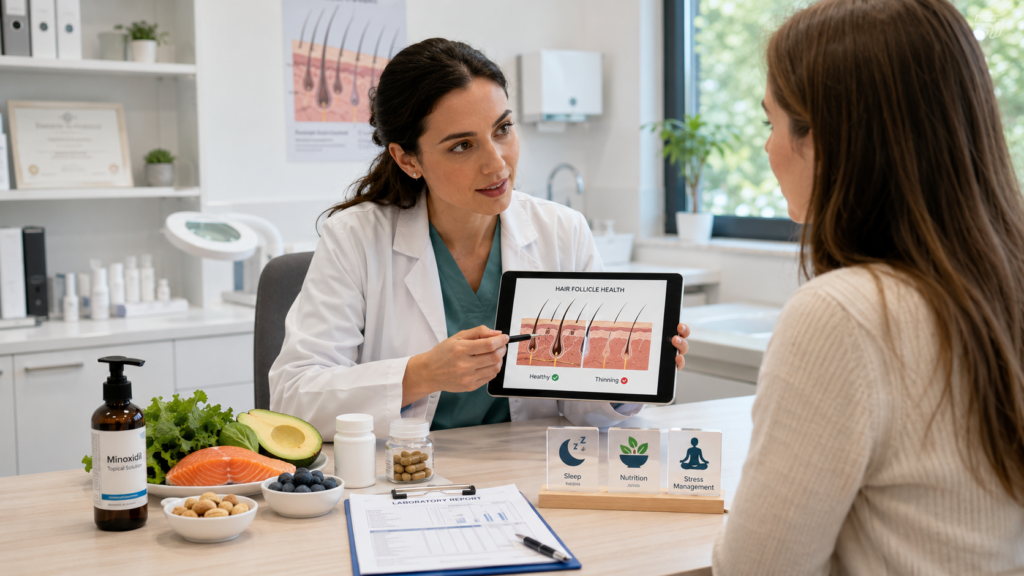
If growing hair back is genuinely your goal, here’s what has real evidence behind it. Minoxidil, well studied, works for a lot of people, both men and women. Finasteride, mostly for men dealing with pattern hair loss, since it works by lowering a hormone linked to shrinking hair follicles. Actually correcting a real deficiency once a test confirms it, whether that’s iron, biotin, or something else entirely. And newer options like laser therapy or PRP treatments, which are looking promising too, even though they cost more and usually need repeat sessions.
None of that fits neatly in a cute gummy bottle. Maybe that’s exactly why biotin keeps winning shelf space anyway. It’s easier to sell hope in a jar than it is to sell a prescription that needs a doctor’s visit first.
Should You Take It?
If you eat a fairly normal diet and nothing seems off, biotin probably won’t hurt you. It also probably won’t do much. Most of it just ends up in your urine, since your body only holds onto what it needs and lets the rest go.
If a blood test actually confirms you’re low, though, then yes, it can genuinely help. Otherwise, save your money for something with real proof behind it instead. If you’re already building a morning routine around supplements, biotin just isn’t the one worth prioritizing over the basics like protein, iron, and sleep.
The Bottom Line
Biotin isn’t fake, and it’s not some scam either. It matters, just not for most people, since most people aren’t actually low on it in the first place. The marketing got way ahead of the science, like it usually does, and if you came here specifically wondering if biotin works for hair, the honest answer is simple. Only if you’re actually deficient. Get tested if you’re worried, fix a real deficiency if you find one, and lean toward something proven, like minoxidil, if hair loss is what you’re actually trying to fix. For more on where hair, skin, and general upkeep overlap, our beauty section has a few related reads worth checking out.
FAQs
Can too much biotin actually hurt me?
Not really. It’s water-soluble, so your body just pees out what it doesn’t use. The real risk isn’t your hair or your health. It’s your next blood test. High doses can throw off thyroid and heart lab results, sometimes badly enough that doctors have flagged false heart attack readings in the ER. Tell your doctor you’re taking it before any bloodwork, full stop.
How long do I have to take it before I’d notice anything?
If you’re actually deficient, most people see some change somewhere around three to six months. Hair grows slow, so anything faster than that is probably placebo or wishful thinking. If you’re not deficient, you can wait a year and get exactly what I got. Nothing.
Does biotin help eyelashes and nails too, or just hair?
Same deal. Nails and hair are both mostly keratin, so the marketing logic applies to both. And the actual evidence is just as thin for both. If you’re deficient, sure. If you’re not, you’re feeding expensive urine either way.
I’m pregnant. Is biotin safe to take?
Prenatal vitamins already have biotin in them at reasonable doses, so you’re probably fine there. Adding extra biotin gummies on top of a prenatal is a different question, and one worth asking your doctor directly rather than trusting a bottle label. I’m not a doctor, and this isn’t the post to gamble on.
What blood test actually checks for a biotin deficiency?
A serum biotin test, though it’s not something your regular doctor orders by default. You usually have to ask or get referred to someone who deals with hair loss or nutrient deficiencies specifically. It’s not an expensive test. Cheaper than a year of gummies, honestly.
Are gummies worse than pills or capsules?
Not worse, just less biotin per dose usually, and extra sugar you don’t need. If you are deficient and a doctor recommends supplementing, a plain capsule does the same job without the sugar and the price markup that comes with anything shaped like candy.