
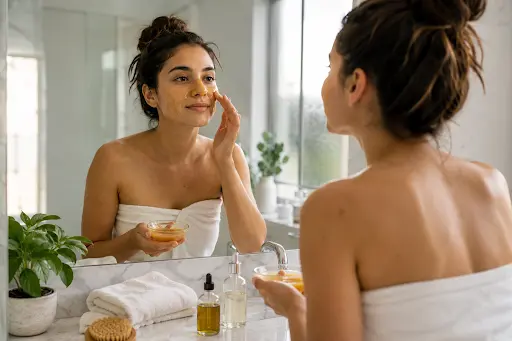
There is a good chance you have found them before little black dots on your nose and possibly even your chin. If you try to pop them, they won’t move an inch, but leave feeling annoyed with yourself.
One very important thing to know: blackheads are not a sign of uncleanliness or of someone not washing their face properly. What causes them is the buildup of oils and dead cells in the pores, and as soon as this mixture is in contact with oxygen, it oxidizes and becomes darkened. This is the end of the story. There is nothing wrong with your skin.
There is no need for five different serums and a $40 blackhead vacuum, either. Just a few simple steps, consistently done, work much better than anything that is being sold to you. Here are what works and what doesn’t, and how to create a system that will last.
What exactly is a blackhead?
Sebum production in the body occurs all the time. Oil from sebaceous glands travels through the pores into the outer layer of your skin by connecting the pore to the hair follicle.
However, there are times when the flow of the oil gets obstructed. Dead skin cells collect along with the oil, causing the pore to get clogged. Since the tip is generally exposed to the air, it oxidizes hence giving a black color and not due to dirt.
The areas affected include nose, chin, and forehead, which are part of T-zone due to increased number of sebaceous glands compared to the other parts of the face. There are also incidences where the back, chest, and shoulder regions are affected.
In any case, a blackhead is scientifically considered as a minor form of acne called open comedo since the pore does not get sealed during the process. However, seal the pore and then the same clog becomes a whitehead.
Why squeezing them out is a bad idea
It’s tempting. You see one, you pinch, and sometimes something comes out. Feels satisfying for about three seconds.
However, here is what really happens beneath. This force drives some of the trapped material deeper into the pore instead of pushing it out. This will cause harm to the surrounding skin, causing redness and inflammation, sometimes even leaving a permanent scar in place of the blackhead.
Another problem is the strong probability that not all of it will get out. Some of it will stay inside, the pore will stretch slightly due to the force applied, and after just a few days, it will be filled again.
Also, there is always a good possibility that not all of it comes out.Part of it stays behind, the pore stretches a bit from the pressure, and within a few days it fills right back up. So you end up doing more damage for a result that doesn’t even last.
This is the section that is usually skipped in such guides, but is very important since the idea here is not to extract blackheads forcefully. The objective is to unclog pores so that they clean themselves and prevent the formation of more blackheads.
Natural ingredients that actually help
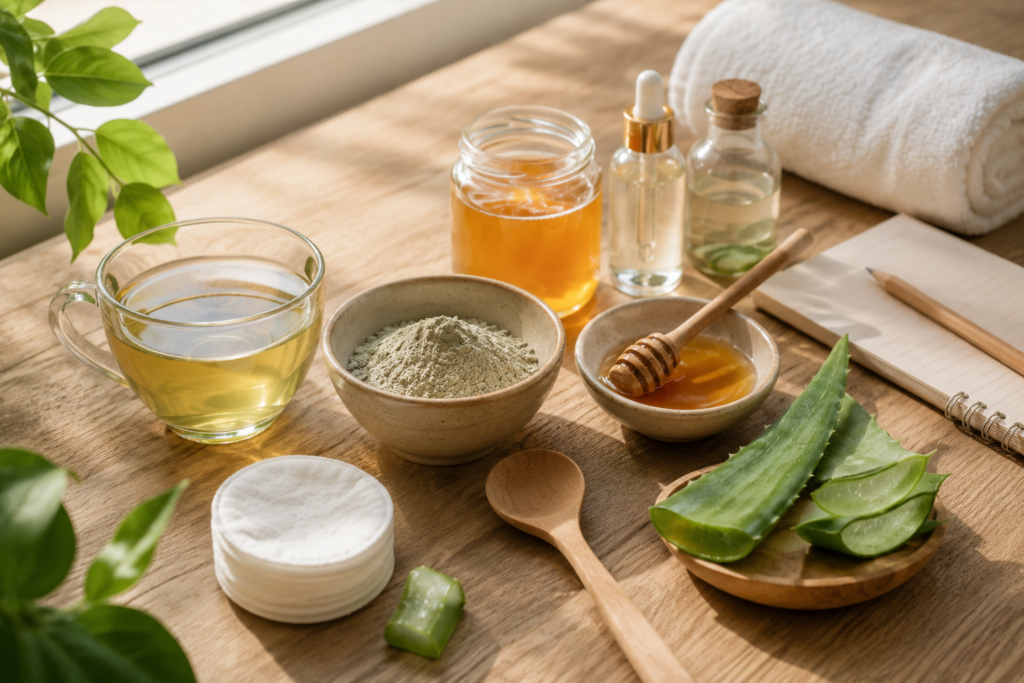
Plenty of kitchen-cupboard remedies get passed around online. Some help. Others are mostly hype, or worse, irritate your skin. Here’s what’s worth your time.
Honey
Raw honey is famous for its antibacterial qualities, thus making it a constituent of many skin care programs designed to treat acne. Don’t settle on pasteurized honey squeezed into a bottle because, in raw form, honey retains all its beneficial components.
Spread a thin layer over clean skin.Fifteen minutes is more than enough time. Use lukewarm water to rinse. This can be done twice or thrice per week without causing any dehydration of the skin that certain skincare products cause.
Green tea
This one surprised a lot of people when studies started backing it up. Brewed green tea applied directly to skin can calm inflammation and may slow down oil production. The polyphenols in it (natural compounds that fight bacteria) are what’s doing most of the work.
Brew a cup, let it cool all the way down, then sweep it over your face with a cotton pad. Or skip the pad entirely and use the wet leaves themselves massage them onto your skin in small circles for about thirty seconds, then rinse.
Clay masks
Kaolin and bentonite clay both pull oil out of the skin almost like a magnet. Nose and chin areas tend to respond well to this.
Once or twice a week is the sweet spot. Daily use backfires strip too much oil and your skin panics, making even more to compensate. You end up worse off than when you started.
Tea tree oil
Strong stuff, this one. It works excellently against bacterial growth in the blocked pores, but using it directly will cause irritation to your skin. You should always add a few drops to carrier oils such as jojoba oil.
Apply the solution on affected areas using a cotton swab.Patch test somewhere small first a lot of people’s skin reacts to the tea tree more than they expect. And just to be clear: this is for skin only. Ingesting tea tree oil is poisonous, even in small quantities.
Aloe vera
For those whose skin is highly sensitive to other substances, aloe is the most gentle among the options. It calms inflammation and has a bit of antibacterial action too.
Smooth pure aloe gel onto clean skin, leave it for ten to fifteen minutes, rinse. Works especially well right after a clay mask soothes whatever tightness the clay left behind.
Building a routine that actually clears pores
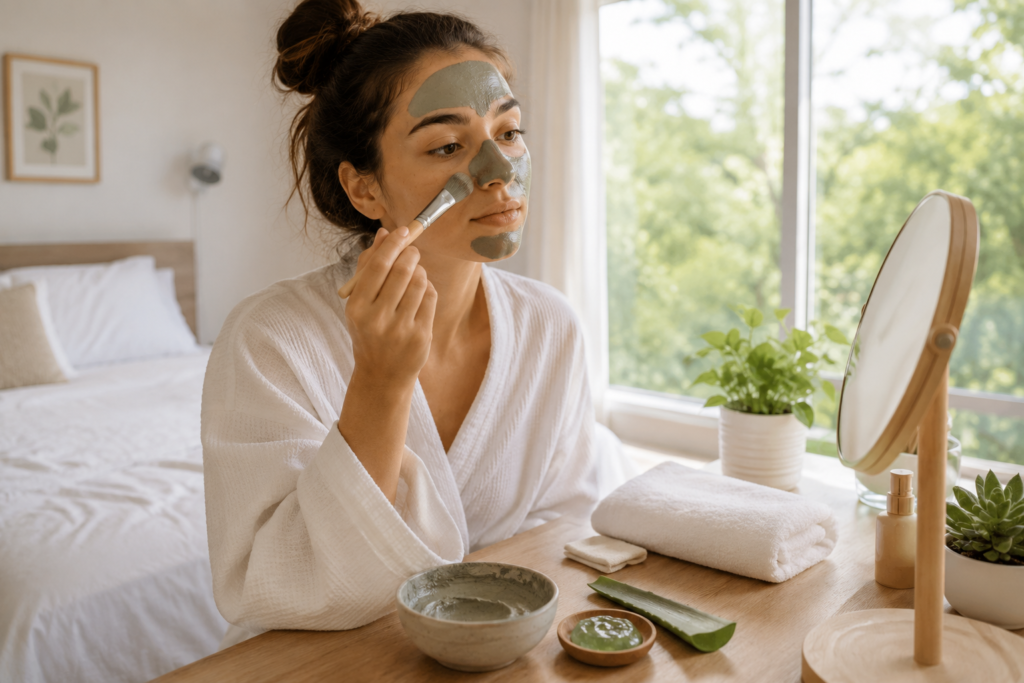
One remedy here and there helps a little. Doing the same things consistently helps a lot more. This is a structure that brings together all the information listed above.
Wash your face two times a day, every single day. Both morning and night, use mild face wash; don’t use anything with fragrance. If you feel your skin taut and squeaky after washing your face, it doesn’t mean it’s clean; it means that your skin is stripped of moisture, and whenever your skin is stripped of moisture, it reacts by producing more oil.
A couple times a week, exfoliate gently. Salicylic acid in a mild formula beats physical scrubs. Most of the time scrubs can be too rough and end up causing the irritation they’re supposed to prevent. If you’d rather go homemade, oats work surprisingly well. Gentle, calming, won’t tear at your skin.
Once or twice weekly, bring in a clay mask. Thin layer on the oily, blackhead-heavy spots. Let it dry. Rinse thoroughly. Then moisturise right away clay leaves skin feeling a bit parched and you want to fix that fast.
And when you actually want to use an extractor tool (the metal kind, not your fingers), steam first. Boil water, place it in a bowl, cover your head with a towel, and put your face above the vapor about one foot away for five to ten minutes.
The heat loosens the clog so the pore lets go more easily way less likely you’ll tear anything. Go gentle with the tool afterward. Never force it. Follow up with aloe to calm things down.
One exception: skip steaming if you have rosacea or skin that flares up easily. The heat can do more harm than good there.
What to avoid completely
Some popular “remedies” should get an automatic rejection despite their regular appearance on the Internet.
Baking soda is often mentioned as an effective exfoliation remedy. Its pH is way too harsh for skin and it disrupts your skin’s natural barrier. You’ll likely end up more irritated and more prone to breakouts than when you started.
Lemon juice is another one to skip entirely. It’s acidic enough to genuinely damage your skin barrier, and it makes your skin far more sensitive to sun damage afterward. Just leave it for your tea.
Toothpaste is a surprisingly common myth, somehow still floating around. It’s made for teeth, not skin, and can cause real burns or irritation when left on your face for any length of time.
The third quick method of getting scars is using aggressive extraction methods using metal tools available on the Internet. If you are interested in this procedure, it is necessary to study its less aggressive alternative and never forget to sterilize the device with rubbing alcohol before its use.
Pore strips are an excellent method for cleaning your face; however, while pore strips can strip away the dirt on the surface of the skin, they cannot address the material which causes the blackhead within the pore, therefore the blackheads reappear.
Using pore strips too often may be satisfying to do because it peels away the dirt on the surface; however, it doesn’t get rid of the material in the pore that is clogging it, hence the reappearance of blackheads.
And don’t layer too many acids, retinoids, and scrubs all in the same routine. This will overload the skin barrier very quickly. Choose one or two methods, allow them some time to actually do their thing, and only then use additional ones.
Preventing new blackheads from forming
Treatment of existing blackheads is one half of the task. Prevention of new blackheads is no less important.
Choose products with “noncomedogenic” claims when looking for moisturizer, sunscreen or foundation. One switch, big difference, and it prevents a lot of buildup before it ever starts.
Take your makeup off every single night. No exceptions, even when you’re exhausted. Sleeping with it on traps oil and product against your skin for hours straight, basically inviting your pores to clog.
Swap your pillowcase out more often than you probably do. A few nights of contact and it’s holding onto oil and residue, which you then press your face into again and again.
Drink enough water, go easy on the heavily processed and sugary stuff when you can. No single food causes blackheads or fixes them on its own, but a diet that’s mostly processed sugar may push oil production up for some people.
When it’s time to see a dermatologist
Most of the time, natural remedies get the job done, but sometimes the skin requires a level of care that is not achievable at home.
If your blackheads still refuse to disappear even after 6 to 8 weeks of having a steady regimen, it’s time to make an appointment with a specialist. If you have acne which causes pain or acne which is more widespread, as well as any scars or dark spots which are not disappearing on their own, then you might want to schedule an appointment.
This will allow the dermatologist to perform some procedures that would not be available otherwise: such as safe comedone extraction, stronger medication, and chemical peels that are specifically tailored to your skin type.
A final word on patience
Clear pores don’t happen overnight, no matter what a product label promises.It usually takes 6 to 8 weeks of regular usage of natural treatments for one to notice significant results due to the turnover period of skin cells.
The most common error that most individuals make is not giving up on the treatment but quitting too soon because there are no changes yet after one to two weeks of usage.
Frequently asked questions
First of all, there is nothing like an overnight remedy, but any product claims this just to sell it to consumers. Steam your face prior to extraction and soothe it using aloe this will show the best results at once. But for the permanent removal of blackheads, you will need much more time.
Kind of, for about a day. They pull off surface gunk and it looks great right when you peel it. The problem is they’re not touching what’s clogged deeper in the pore, so the blackhead just rebuilds.
There’s no food that single-handedly causes or cures blackheads wish it were that simple. But going heavy on processed sugar might bump up oil production for some people. Drinking water and eating reasonably helps your skin overall, even if it’s not doing the heavy lifting.
Yes, as long as you dilute it with a carrier oil and patch test first. Don’t put it on undiluted it’s too strong and can burn sensitive skin. And never swallow it.
Be consistent with the regimen for 6 to 8 weeks at least. Your skin cannot shed itself any faster than that even if you want to. It’s like resetting the clock every few days if you keep on changing your treatment regimen.